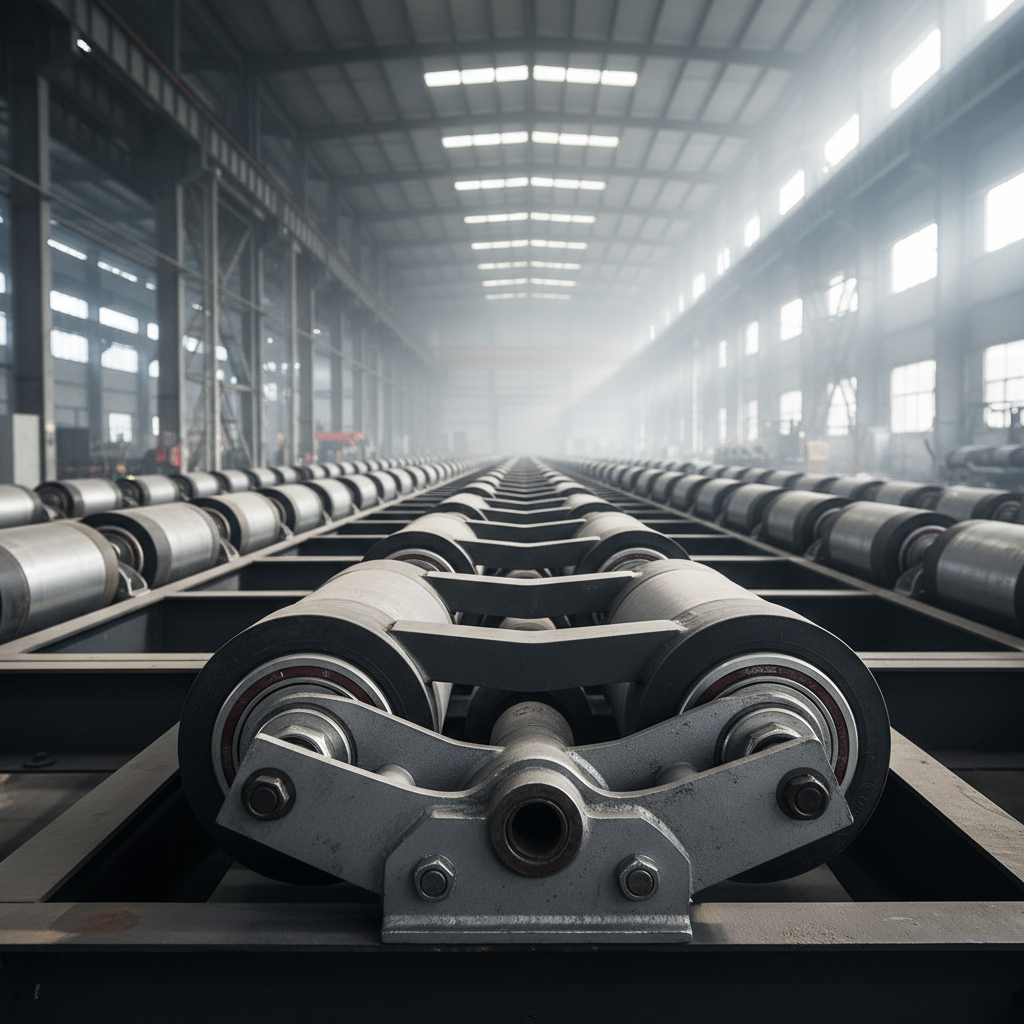
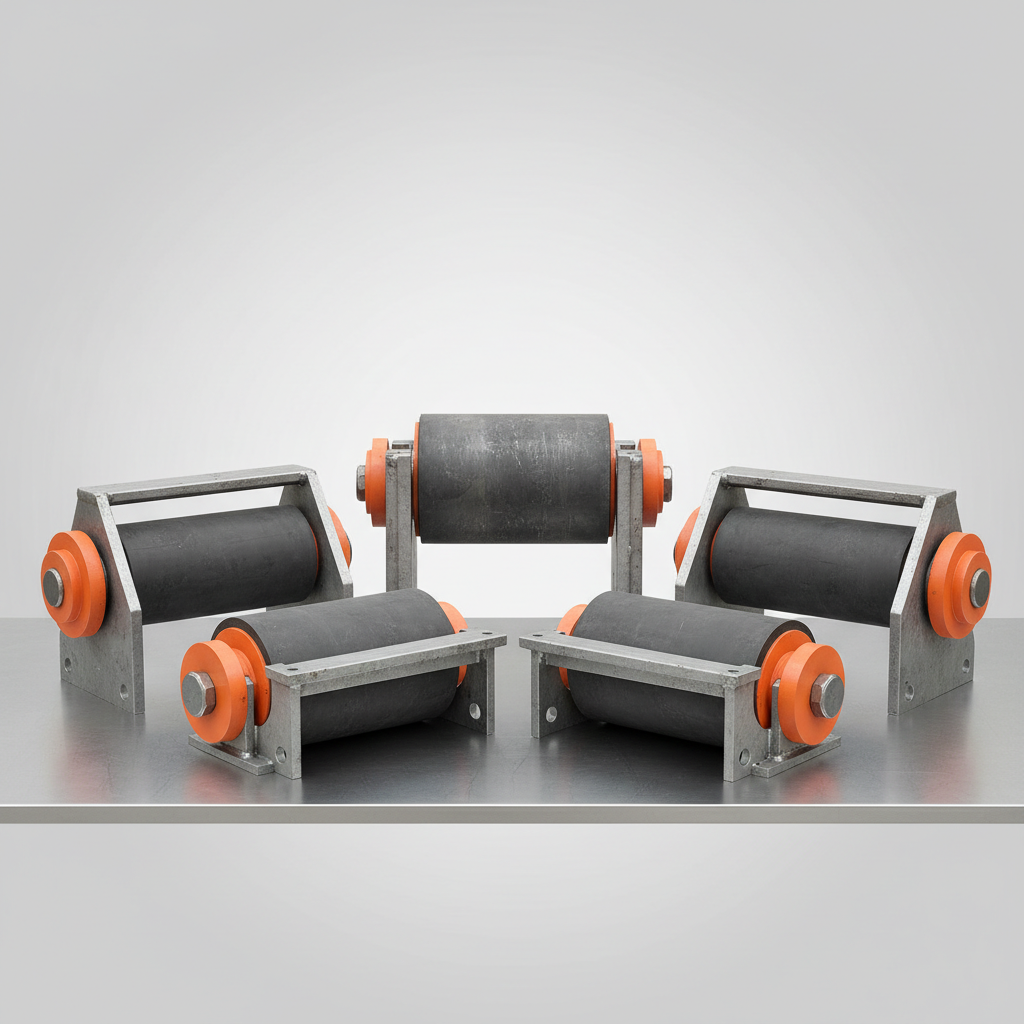
The operational efficiency of bulk material handling systems is increasingly dependent on the precision and durability of specialized hardware. As industrial throughput requirements rise, the role of conveyor components manufacturers has shifted from providing generic replacement parts to developing engineered solutions that mitigate friction and wear.
The primary challenge in high-capacity conveying lies in the interface between the belt and the pulley. Material slippage, accelerated abrasion of the belt cover, and premature bearing failure often stem from inadequate lagging materials or poorly aligned idlers. For industries such as mining and cement production, these technical failures translate directly into unplanned downtime and significant operational losses.
This analysis explores the technical evolution of conveyor components, focusing on the transition toward advanced polymer elastomers and precision-engineered idlers. By examining the relationship between material properties and system longevity, we provide a framework for optimizing component selection in harsh industrial environments.


The shift toward polyurethane elastomers in pulley lagging represents a critical advancement in material science. Unlike traditional rubber, polyurethane provides a unique hybrid of plastic strength and rubber elasticity, which is essential for maintaining grip under heavy loads.
This synergy allows for a wide hardness range, typically from Shore A10 to D80, enabling engineers to customize the lagging based on the specific abrasive nature of the transported material and the belt tension.
In high-load conveying, the wear resistance of the pulley surface is the primary determinant of maintenance intervals. Polyurethane lagging demonstrates superior abrasion resistance, often ranging from 0.01 to 0.10 cm³/1.61km, which is approximately 3 to 5 times more durable than standard rubber.
Beyond wear, oil resistance is a critical specification. Since polyurethane is a strong polar polymer, it maintains structural integrity when exposed to non-polar mineral oils and mechanical lubricants, preventing the swelling and softening that typically degrade rubber components.
Technical parameters such as tensile strength (approximately 10 Mpa) and elongation at break (up to 450%) ensure that the lagging can absorb sudden impact loads without cracking or detaching from the drum surface.
The failure of idlers and rollers is rarely caused by the shell itself, but rather by the ingress of contaminants into the bearing housing. In dusty environments like cement plants, standard seals are often insufficient.
When combined with unique circlip assembly methods, these sealing systems ensure that the internal precision of the roller is maintained throughout its operational lifecycle, reducing the frequency of catastrophic bearing seizures.
Evaluating the efficacy of different lagging materials requires a normalized look at their operational characteristics. Factors such as vibration absorption, coefficient of friction, and thermal stability determine the overall system efficiency.
The following data represents a normalized engineering assessment comparing polyurethane against traditional rubber and plastic options across key performance dimensions.
In representative engineering scenarios such as iron ore mines or limestone quarries, the accumulation of fine particulates on the pulley surface can lead to "belt slip," reducing the effective drive ratio. The use of ceramic rubber pulleys or polyurethane lagging with optimized textures helps in shedding debris and maintaining a consistent coefficient of friction.
Integration of self-aligning idlers and impact beds further protects the belt from longitudinal misalignment and impact-induced punctures at loading points, ensuring that the components provided by conveyor components manufacturers function as a cohesive system rather than isolated parts.
The industry is moving toward "intelligent" components capable of providing telemetry on wear levels and temperature. While current mechanical solutions focus on material durability, the next evolution involves embedded sensors within the roller housing to predict bearing failure.
Furthermore, the development of bio-based elastomers that match the performance of polyurethane while reducing the environmental footprint of manufacturing is becoming a priority for global procurement standards.
Engineering focus is also shifting toward variable groove angle electric plow trippers and customized roller configurations to handle more diverse material densities and flow rates in automated warehouses.
Choosing the right component requires balancing the operating environment against the required service life. A high-duty configuration is necessary for mining, while precision configurations suffice for light industrial packaging.
The following matrix outlines the typical selection logic based on application profiles and technical requirements.
Buyers should verify specific hardness and tensile values against the manufacturer's technical documentation to ensure compatibility with their belt grade.
| Configuration Type | Primary Material | Durability Factor | Recommended Use Case |
|---|---|---|---|
| Standard Configuration | Rubber Lagging | Baseline | Light Duty / Low Dust |
| High-Duty Profile | Polyurethane | 3x - 5x Baseline | Mining / Heavy Abrasives |
| Extreme Environment | Ceramic Rubber | Maximum | High Impact / High Heat |
| Precision Alignment | Steel/Polymer | High Accuracy | Long-distance Conveying |
| Oil-Resistant Profile | Special PU | Chemical Stable | Fuel/Chemical Plants |
| Custom Industrial | Hybrid Materials | Application Specific | Automated Logistics |
Polyurethane offers significantly higher wear resistance (3-5 times that of rubber) and superior oil and ozone resistance. Its ability to maintain elasticity across a wide hardness range (Shore A10-D80) allows for better grip and longer service life in abrasive environments, reducing the frequency of relagging operations.
Labyrinth seals create a complex, winding path that makes it difficult for dust, water, and other contaminants to reach the bearings. By preventing the ingress of particulates and the leakage of lubricant, these seals can extend the operational life of rollers to approximately 50,000 hours in high-dust environments.
Polyurethane is the optimal choice for oil-exposed environments. As a strong polar polymer compound, it has very little affinity with non-polar mineral oils and is resistant to corrosion from fuel and mechanical oils, unlike standard rubber which tends to soften and degrade.
Buyers should prioritize tear strength (KN/m) and elongation at break (%). For high-impact zones, a high elongation percentage (e.g., 450%) indicates the material can absorb energy without fracturing, while high tear strength prevents the lagging from peeling under heavy load.
Misalignment is best managed by integrating self-aligning idlers and friction aligning idlers into the system. These components automatically adjust the belt's position during operation, reducing edge wear and preventing material spillage, which is more effective than manual adjustments.
Yes, polyurethane elastomers are designed with good low-temperature performance, maintaining their flexibility and grip even in cold climates. However, the specific grade and hardness should be verified against the minimum operating temperature of the site to ensure no embrittlement occurs.
The transition from generic rubber components to engineered polyurethane and precision-sealed hardware represents a fundamental shift in maintenance strategy—moving from reactive replacement to proactive longevity. By matching material hardness and sealing technology to the specific environmental stressors of a site, operators can dramatically reduce TCO (Total Cost of Ownership).
For procurement teams and engineers, the focus should remain on verified technical specifications such as abrasion rates and sealing certifications. Partnering with experienced conveyor components manufacturers ensures that the hardware is not only durable but integrated into a cohesive system that optimizes throughput and minimizes unplanned downtime.