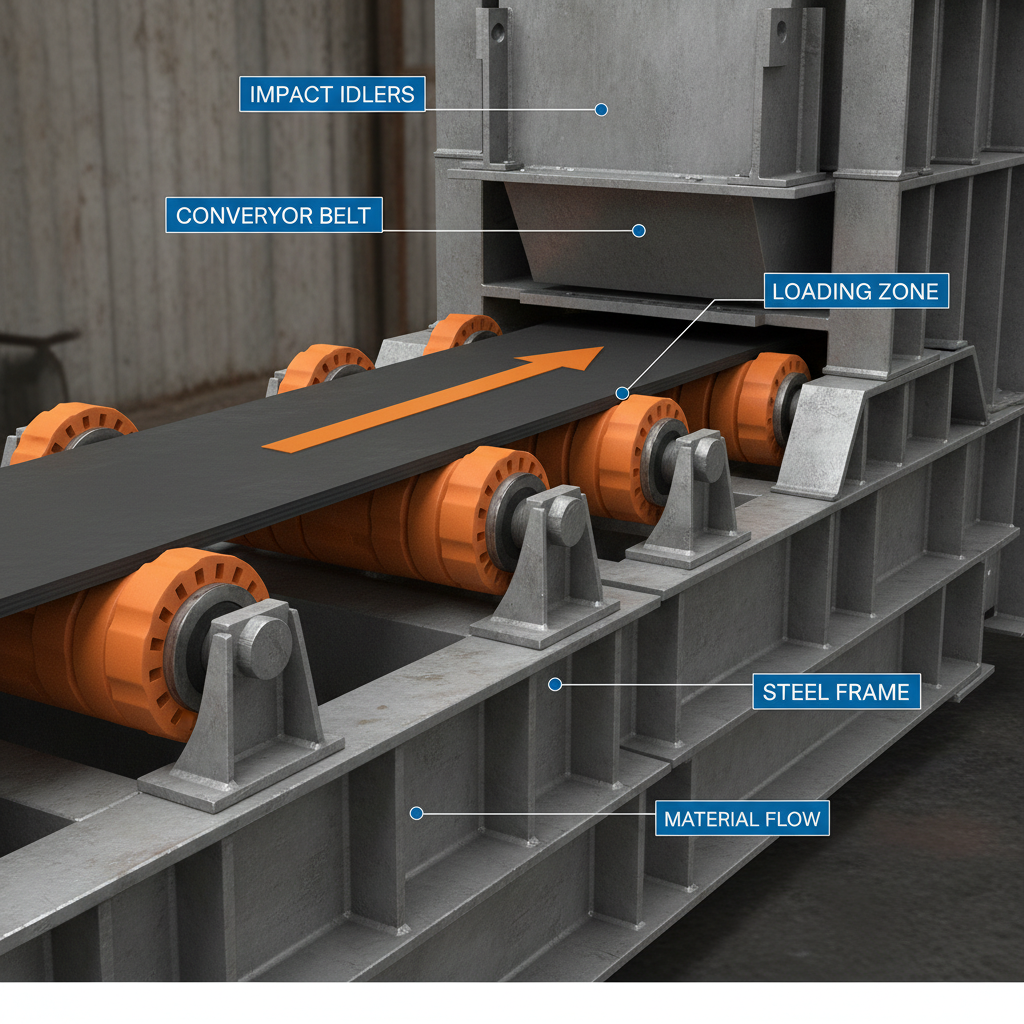


When managing the operational budget of a bulk material handling system, understanding the conveyor belt roller price is critical for balancing initial capital expenditure with long-term maintenance costs. In the conveyor machinery manufacturing sector, rollers are high-wear components that directly influence the efficiency and reliability of the entire transport line.
Procurement managers often struggle with the volatility of component pricing, which is driven by raw material costs and specific engineering requirements. Determining a fair price requires analyzing the trade-off between low-cost standard rollers and high-performance specialized versions designed for extreme environments, such as mines or cement plants.
This analysis provides a comprehensive framework for evaluating roller pricing, the technical factors that drive cost variations, and a strategic approach to selecting the most cost-effective components for specific industrial applications.

Direct Cost Drivers in Roller Manufacturing

The base conveyor belt roller price is primarily dictated by the materials used in the shell and the internal bearing assembly. Steel rollers are standard for heavy-duty loads, but the grade of steel and the thickness of the tube significantly affect the final quote. Polyurethane or nylon rollers offer corrosion resistance and noise reduction, which typically command a different price point compared to carbon steel.
Beyond the shell, the bearing specification—such as the use of precision-engineered housings—plays a major role. For instance, components utilizing specialized materials like low-pressure polyethylene or nylon for dustproofing in harsh environments require more complex manufacturing processes, increasing the unit cost but reducing downtime.
Comparing Standard vs. Specialized Roller Costs
Standard troughing or return idlers are produced in high volumes, leading to lower per-unit prices. These are suitable for clean environments with consistent loads. However, specialized rollers, such as impact idlers or self-aligning rollers, involve complex internal mechanisms and reinforced structures to handle material shock or belt drift, naturally increasing their market price.
Customized rollers, designed for specific diameter requirements or unique loading conditions, often require a separate engineering phase. This "customization premium" covers the R&D and specialized tooling needed to ensure the roller fits perfectly into the existing conveyor frame without compromising the belt's tracking.
The Impact of Sealing Technology on Lifecycle Value
One of the most critical yet overlooked factors in the conveyor belt roller price is the sealing system. Basic seals are inexpensive but fail quickly in dusty environments. Labyrinth seals and contact double seals, which prevent contaminants from entering the bearing housing, increase the initial purchase price but extend the service life of the roller significantly.
From an engineering perspective, a roller that lasts 50,000 hours due to superior sealing is far more economical than a cheap roller that requires replacement every 10,000 hours. The value lies in the reduction of labor costs and the avoidance of unplanned system outages in high-dust environments like cement plants or mines.
Relative Cost-to-Durability Analysis
To understand the relationship between investment and performance, we can look at a relative index comparing different roller tiers. This conceptual framework illustrates how a marginal increase in the initial conveyor belt roller price can lead to a disproportionate increase in operational lifespan.
As shown in the illustrative index, "Ultra-Heavy Duty" rollers have the highest initial cost but provide the lowest cost-per-hour of operation. This makes them the optimal choice for critical sections of the conveyor where failure would cause catastrophic production losses.
Hidden Costs of Low-Price Component Selection
Selecting rollers based solely on the lowest quote often introduces "hidden costs" that erode the initial savings. Frequent replacements lead to increased labor expenses and higher consumption of consumables. Furthermore, rollers with poor precision can increase belt friction, leading to higher energy consumption for the driving pulley and accelerated belt wear.
Poorly sealed rollers are particularly hazardous; they allow moisture and dust to penetrate the bearings, which can cause the roller to seize. A seized roller acts as a brake on the belt, potentially causing the belt to slide or even tear, resulting in repair costs that far exceed the original price difference of a premium roller.
Procurement Strategies for Bulk Roller Orders
When sourcing rollers in large quantities, buyers can optimize costs by consolidating specifications. Standardizing roller diameters and bearing sizes across different conveyor sections allows for bulk discounts from manufacturers and reduces the complexity of on-site spare parts inventory.
It is also advisable to evaluate the supplier's production capacity and quality management systems. A manufacturer with ISO9001 certification and integrated R&D capabilities can often provide a better total value by optimizing the design for the specific application, thereby reducing the quantity of rollers needed per meter of conveyor.
Evaluating Total Cost of Ownership (TCO)
The true cost of a conveyor roller is not the purchase price, but the Total Cost of Ownership (TCO). This includes the acquisition cost, installation labor, energy impact, and the cost of downtime. The following framework compares common roller types based on their TCO profiles.
| Roller Type | Initial Price | Lifespan | Best Application |
|---|---|---|---|
| Standard Steel | Low | Medium | General Light Duty |
| Impact Idler | Medium | High | Loading Points |
| Polyurethane | Medium | High | Corrosive Environments |
| Labyrinth Sealed | Medium-High | Very High | High Dust/Mining |
| Customized | High | Application Specific | Complex Geometries |
| Self-Aligning | High | Medium-High | Belt Tracking Fixes |
By analyzing these dimensions, procurement teams can move from a "lowest price" mindset to a "lowest cost per ton" strategy, ensuring the conveyor system operates at peak efficiency with minimal intervention.
Frequently Asked Questions
The primary drivers are raw material costs (steel vs. polymer), the type of sealing system used (labyrinth vs. basic), bearing quality, and whether the roller is a standard off-the-shelf part or a customized engineering solution.
Not necessarily. High-specification rollers are overkill for clean, light-duty applications. However, for mining, cement, or chemical plants, investing in premium rollers with advanced seals is usually more cost-effective due to the extreme wear conditions.
Advanced seals like labyrinth or double-contact seals increase the initial price but prevent dust and water ingress. This protects the bearings, potentially extending the service life from a few thousand hours to over 50,000 hours.
Yes. By reducing the variety of roller diameters and types used across your facility, you can order larger batches of a single specification, which typically lowers the unit price and simplifies inventory management.
The main risks include premature bearing failure, increased belt friction, and higher downtime. In worst-case scenarios, a seized low-cost roller can damage the conveyor belt, leading to extremely expensive repairs.
Look beyond the unit price. Evaluate the material specifications, the seal type, the bearing brand, and the manufacturer's quality certifications (like ISO9001) to determine the actual value provided.
Conclusion
Optimizing the conveyor belt roller price requires a shift in focus from the initial invoice to the total cost of ownership. By aligning the technical specifications—particularly sealing and material choices—with the actual severity of the operating environment, companies can significantly reduce long-term maintenance costs and prevent costly unplanned downtime.
For those evaluating high-performance conveying solutions, reviewing detailed technical specifications at www.idleraohua.com can help in selecting the right balance of durability and cost for specific industrial requirements.