The efficiency of a bulk material handling system is often decided not by the motor's power, but by the integrity of the supporting components. In high-impact loading zones, the failure of a single idler can lead to belt misalignment, premature wear, or catastrophic structural damage.
Selecting reliable conveyor rollers suppliers requires a technical understanding of how kinetic energy from falling materials is dissipated. The transition from a free-fall state to a horizontal transport state creates immense stress that standard rollers cannot withstand, necessitating specialized impact-absorption technology.
This analysis examines the critical role of impact rollers and precision engineering in extending conveyor life cycles, providing a framework for operators to evaluate component specifications against actual operational stresses.


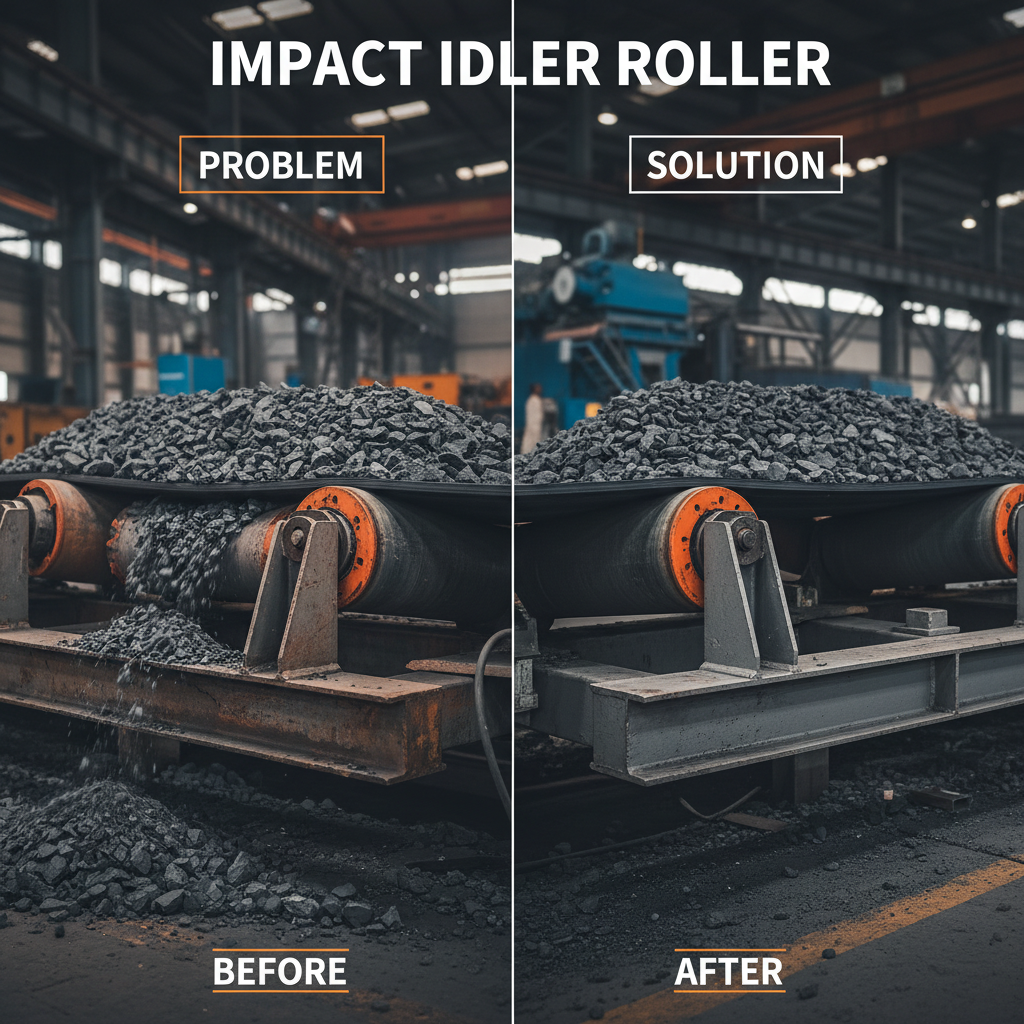
When bulk materials fall from a chute onto a moving belt, they generate a localized force that far exceeds the static load of the material. Standard troughing rollers are designed for support, not absorption; consequently, direct impact often leads to the deformation of the roller shell or the crushing of the bearing race.
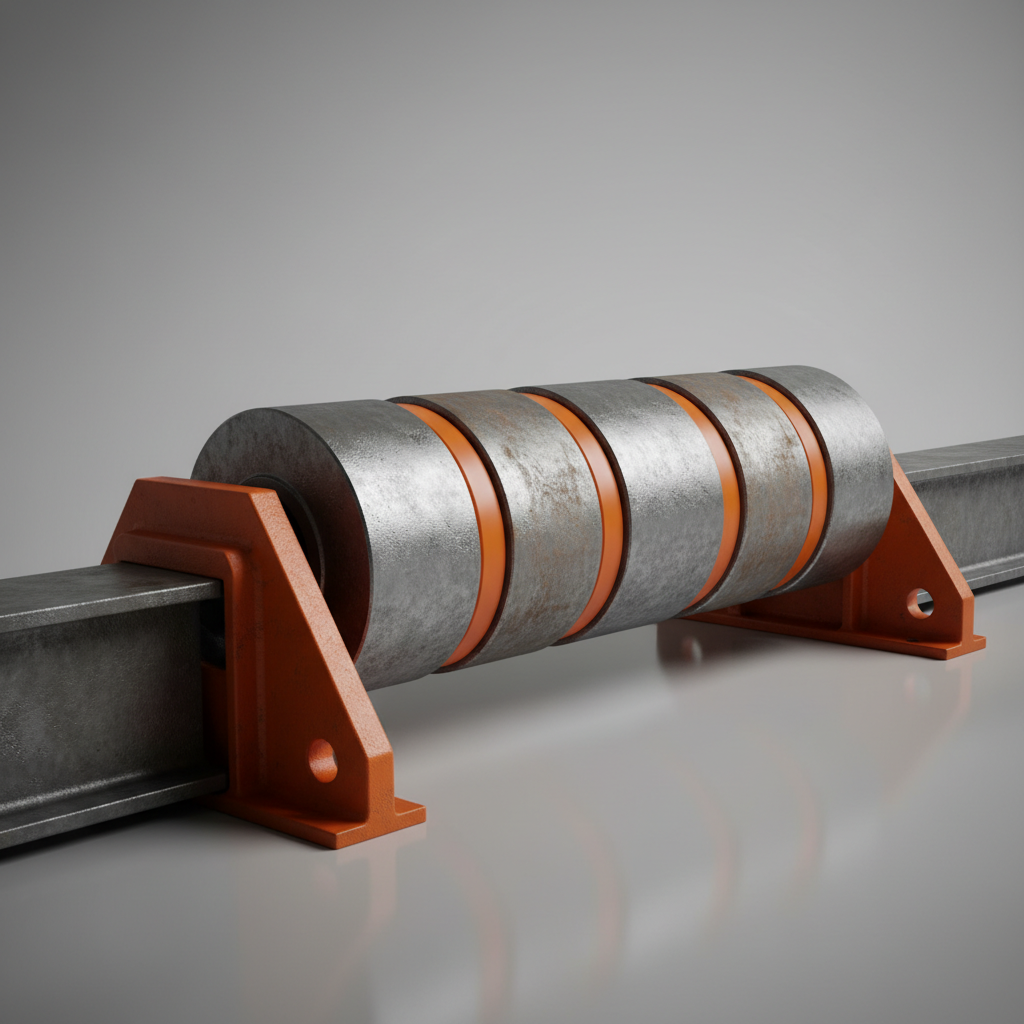
Impact rollers solve this by incorporating elastic rings—typically made of NR (Natural Rubber) with synthetic additives or polyurethane. These rings act as shock absorbers, distributing the force across a wider area and preventing the belt from striking the steel frame of the conveyor.
The longevity of a roller depends on the synergy between its shell material and its axle. For heavy-duty applications, shell materials like angle steel, channel steel, and high-grade steel pipes are utilized to ensure the roller does not collapse under peak loads. The axle, often made from Q235B or 1045 high-precision cold-drawn steel, must maintain strict linearity to prevent vibration-induced wear.
Welding quality is another overlooked variable. Automatic double-end welding using carbon dioxide gas shielding ensures that the joint between the shaft and the shell is seamless and penetration is complete, reducing the risk of structural failure during sudden impact events.
Furthermore, the choice of impact material—whether flame-retardant anti-static rubber or high-abrasion polyurethane—must be matched to the environment. In coal mines, anti-static properties are critical for safety, whereas in recycling plants, polyurethane's superior tear resistance is more valuable.
In industries such as cement production or metallurgy, the primary enemy of conveyor rollers is not the load, but the environment. Fine particulate matter acts as an abrasive that penetrates the bearing housing, rapidly degrading the lubricant and leading to premature seizure.
The implementation of flexible contact seals at the roller axle interface is the most effective method to ensure that dust remains external to the bearing system, directly extending the service life of the roller from standard intervals to over 30,000 hours.
Advanced sealing systems, such as labyrinth seals or double-contact seals, create a physical barrier that is significantly more effective than simple rubber lips. When paired with high-quality bearings from brands like SKF or NSK, the resulting assembly can operate in extreme dust concentrations without requiring frequent maintenance.
Quantifying the value of high-specification rollers involves analyzing the trade-off between initial procurement cost and the total cost of ownership (TCO). While basic rollers are cheaper, the labor costs associated with frequent replacements and the revenue lost during unplanned downtime often make them more expensive over a 24-month period.
A relative performance index can be used to compare different roller configurations based on their resilience, seal effectiveness, and material durability. This allows plant managers to allocate higher-cost components specifically to the high-stress "receiving zones" while using standard idlers elsewhere.
In a typical industrial setting, such as a crushing plant or a steel mill, the receiving area is the most volatile section of the conveyor. Here, the impact roller must not only support the belt but also prevent the "trampolining" effect, where the belt bounces upon impact, causing material spillage and belt instability.
For operators evaluating their current setup, the critical indicator for upgrading to specialized impact rollers is the frequency of belt cover tears. If the belt is exhibiting longitudinal rips in the loading zone, it is a clear signal that the current support system is failing to dissipate the kinetic energy of the falling bulk material.
The industry is moving away from "one-size-fits-all" rollers toward customized engineering. Modern designs, like the double-center roller new type aligning idler, combine the support function with active belt tracking, reducing the need for separate aligning stations and simplifying the conveyor frame.
Innovation is also visible in the integration of different materials. The use of ceramic lagging on pulleys and specialized polyurethane on rollers allows for higher friction and better wear resistance in wet or sticky environments, where standard rubber would slide or degrade.
As automation increases, there is a growing demand for rollers with integrated sensing capabilities or those that can withstand extreme belt widths (up to 2400mm) without deflection, pushing the boundaries of shaft metallurgy and shell wall thickness.
When vetting conveyor rollers suppliers, the focus should shift from the unit price to the technical capability of the manufacturer. Key indicators include the precision of their welding process, the brands of bearings they utilize, and their ability to customize shaft ends (Type A through F) to fit existing frames.
A manufacturer's commitment to quality management, evidenced by ISO9001 certification and adherence to international standards like CENA, DIN, or JIS, provides a baseline for reliability. However, the true test is the service life in actual field conditions.
The following framework illustrates how to compare different roller specifications based on operational requirements, helping buyers avoid the common mistake of over-specifying for low-stress areas or under-specifying for high-impact zones.
| Scenario | Primary Stress | Recommended Material | Critical Feature |
|---|---|---|---|
| Loading Point | High Impact | NR/Polyurethane | Elastic Ring Absorption |
| Dusty Environment | Abrasive Wear | Steel Pipe Shell | Labyrinth Sealing |
| Wet/Acidic Area | Corrosion | Coated Steel/PU | Corrosion-Resistant Paint |
| High-Speed Run | Vibration | Cold-Drawn Steel Axle | Precision Balance |
| Extreme Heavy Load | Static Pressure | Channel Steel Shell | Wall Thickness > 5mm |
| Belt Tracking Zone | Lateral Force | Customized Roller | Tapered/Aligning Geometry |
Troughing rollers are designed to support the belt and hold the material in a "u-shape" during transport, focusing on load distribution. Impact rollers are specifically installed at loading points and feature elastic rubber or polyurethane rings to absorb the shock of falling bulk materials, protecting the belt from punctures and the conveyor frame from structural fatigue.
The seal is the first line of defense for the bearings. Basic seals may allow fine dust to enter, which contaminates the grease and causes abrasive wear. High-performance seals, such as flexible contact seals or labyrinth seals, effectively block particulates, which can increase the service life of the roller from a few thousand hours to over 30,000 or even 50,000 hours in harsh environments.
It depends on the application. Natural Rubber (NR) with synthetic additives provides excellent elasticity and shock absorption, making it ideal for very heavy, sudden impacts. Polyurethane (PU) offers superior abrasion resistance and tear strength, making it more suitable for conveying sharp or highly abrasive materials where the ring itself is subject to wear.
Key indicators include visible wear or "flattening" of the rubber rings, audible grinding noises coming from the bearing housing (indicating seal failure), and an increase in belt misalignment at the loading zone. Additionally, if you notice increased wear on the bottom cover of the conveyor belt, it suggests the impact rollers are no longer providing sufficient absorption.
Shaft end types (e.g., A, B, C, D, E, F) are determined by the idler frame design. You must match the shaft end geometry to the mounting bracket's locking mechanism to ensure a secure fit. It is recommended to provide your current frame specifications or a technical drawing to your supplier to ensure compatibility and prevent rollers from slipping or vibrating.
No, it is not cost-effective or technically necessary. Impact rollers create more rolling resistance than standard idlers due to their elastic rings. They should be used exclusively in the loading zone and areas where material may fall onto the belt. For the rest of the conveyor, standard troughing, return, or aligning idlers are more efficient and economical.
Optimizing a conveyor system requires a shift in focus from the overall machinery to the precision of its smallest components. The integration of high-quality impact rollers, advanced sealing, and precision metallurgy transforms the loading zone from a point of failure into a controlled transition, significantly reducing downtime and belt replacement costs.
For those managing high-capacity bulk handling, the investment in engineered components from experienced manufacturers is not merely a procurement choice, but a strategic move toward operational stability and long-term cost reduction.