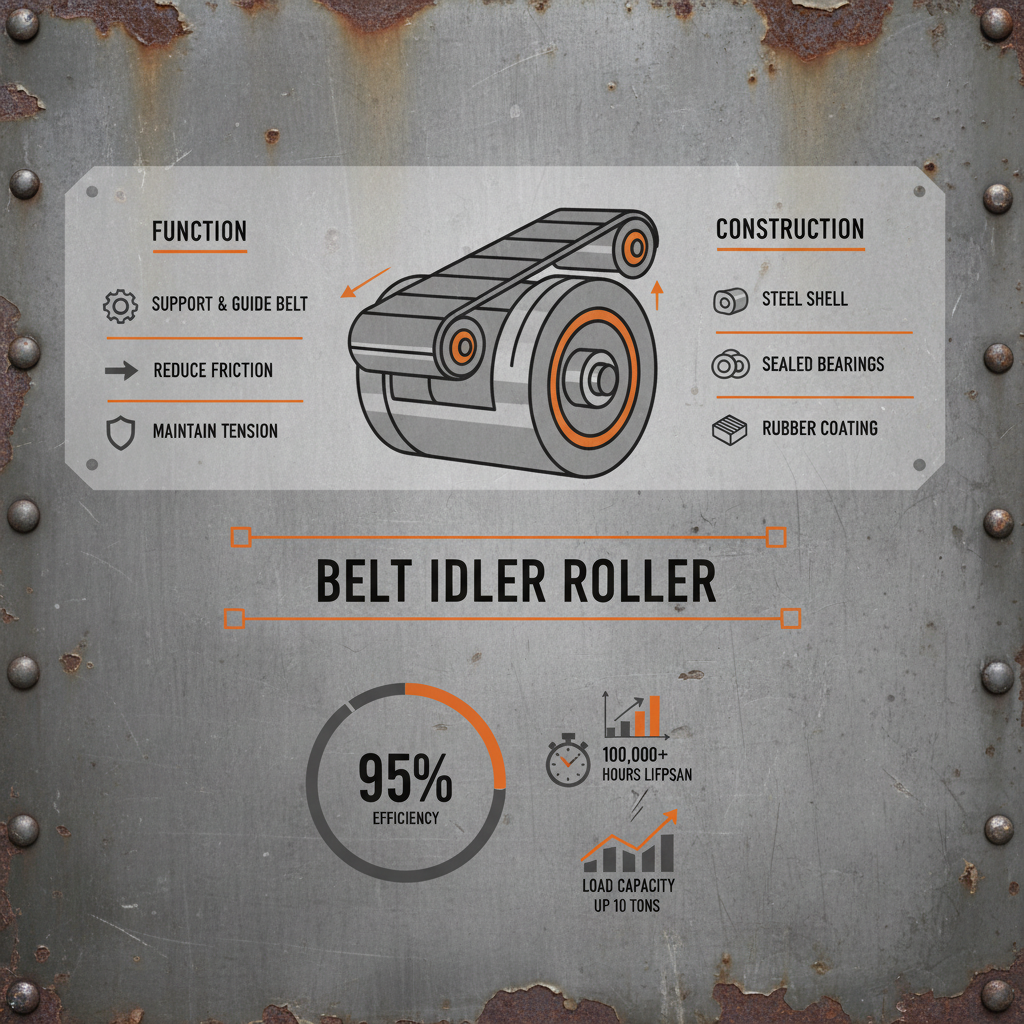
Selecting the right rollers for a bulk handling system often comes down to a trade-off between initial procurement costs and the long-term operational expense of frequent replacements. In high-dust environments like cement plants or mining sites, the failure of a single idler can lead to belt misalignment, premature wear, and unplanned systemic downtime.
The core challenge for procurement managers is identifying conveyor belt rollers suppliers who can provide components that resist contaminant ingress while maintaining low rotational resistance. This requires a deep understanding of sealing technologies, bearing housing precision, and the chemical compatibility of the shell materials.
This analysis examines the technical criteria for evaluating roller quality, the impact of specialized sealing on service life, and the logical framework for selecting components based on specific industrial stressors.


Historically, conveyor rollers were simple steel cylinders with basic ball bearings. However, as industrial throughput increased, the industry shifted toward specialized geometries. The introduction of troughing rollers, impact idlers, and self-aligning mechanisms allowed for higher belt speeds and larger material volumes without sacrificing stability.
Modern design focuses on the intersection of friction reduction and structural rigidity. The use of precision-machined roller bearing housings and unique circlip assemblies has transformed the idler from a consumable part into a long-term asset. In environments with heavy particulate matter, the focus has shifted entirely to the "seal-first" philosophy to protect internal kinematics.
Evaluating a roller's quality requires looking beyond the outer shell. The internal bearing clearance and the quality of the steel used for the shaft are the primary determinants of the "run-out" or eccentricity. High eccentricity leads to vibration, which accelerates belt wear and increases the energy required to move the load.
Material selection for the shell is equally critical. While carbon steel is standard, specialized environments require polyurethane rollers or ceramic lagging. Polyurethane, for instance, provides a balance of impact absorption and abrasion resistance, which is essential for chutes where material drop is frequent.
Finally, the lubrication method dictates the maintenance interval. Pre-lubricated bearings with high-quality grease are standard, but the ability of the seal to retain this lubricant while excluding external contaminants is what defines the actual service life in the field.
The failure of most conveyor rollers is not due to structural collapse, but rather the ingress of dust and moisture into the bearing race. This creates an abrasive paste that grinds down the bearing surfaces, leading to seizure. To combat this, advanced sealing architectures have been developed.
The implementation of labyrinth seals combined with contact double seals creates a multi-stage barrier that can extend the service life of a roller to 50,000 hours in high-dust environments, significantly exceeding basic international standards.
These systems work by creating a tortuous path for contaminants. A labyrinth seal uses a series of "folds" to slow down air and dust, while the contact seal provides the final physical barrier. When integrated with a precise circlip assembly, the seal remains tight against the shaft even under heavy radial loads.
Different roller types experience varying levels of stress and wear. Impact rollers, for example, handle the kinetic energy of falling material and require more frequent inspection than return idlers. By mapping the maintenance intensity, operators can optimize their replacement schedules.
The following index illustrates the relative maintenance demand across common conveyor components. A higher value indicates a more frequent need for inspection or replacement due to the inherent stressors of its position in the system.
In a typical industrial setting, such as a mining conveyor, the transition point where material is loaded onto the belt is the most critical area. Here, standard rollers are insufficient; an impact bed or spring impact idlers are necessary to protect the belt from puncture and reduce the shock transmitted to the conveyor frame.
Conversely, in long-distance transport sections, the priority shifts to belt tracking. Friction aligning idlers and taper rollers are strategically placed to prevent the belt from drifting, which would otherwise cause edge fraying and material spillage. The selection process must therefore be a map of the conveyor's specific stress zones.
The industry is moving toward "smart idlers" equipped with sensors that can detect bearing temperature and vibration in real-time. This allows for predictive maintenance, replacing a roller just before it fails rather than following a rigid calendar schedule or reacting to a belt snap.
Additionally, there is a growing demand for customized materials. We are seeing an increase in the use of specialized rubber compounds for pulley lagging—such as NBR for oil resistance or Hypalon for chemical environments—to ensure that the grip between the belt and the drive pulley remains constant under extreme conditions.
Environmental sustainability is also driving a shift toward rollers with lower rolling resistance. By optimizing the bearing geometry and reducing internal friction, companies can lower the total energy consumption of the conveyor system, contributing to lower operational costs and a reduced carbon footprint.
When auditing conveyor belt rollers suppliers, buyers should prioritize technical transparency over marketing claims. A supplier's ability to provide detailed test results on rubber adhesion strength and abrasion loss is a strong indicator of their quality control maturity.
Quality assurance is often reflected in the certifications held, such as ISO 9001, but the real test is in the product's performance in the field. Inquiries should focus on the specific sealing technology used and the verified service life of the rollers in environments similar to the buyer's own.
The following table provides a decision-making framework for comparing roller options based on the operational environment and the required performance metrics.
| Environment | Primary Stressor | Recommended Roller | Key Selection Metric |
|---|---|---|---|
| Mining/Quarry | High Dust/Impact | Labyrinth Seal Impact Idler | Seal Integrity/Hardness |
| Cement Plant | Fine Particulates | Double-Contact Seal Roller | Bearing Housing Precision |
| Chemical Plant | Corrosive Vapors | Polyurethane/Stainless Roller | Chemical Compatibility |
| Food Processing | Hygiene/Moisture | Stainless Steel/PU Roller | Material Grade/Wash-down |
| Long Haul | Belt Drift | Taper Aligning Idler | Taper Angle Accuracy |
| Loading Point | Heavy Kinetic Load | Spring Impact Idler | Spring Rate/Cushioning |
Roller diameter directly affects the bearing speed (RPM). For high-speed belts, larger diameter rollers are preferred to keep the bearing RPM within a safe operating range, reducing heat generation and wear. You must balance the diameter with the available space in the idler frame and the weight of the assembly to avoid excessive structural stress.
Troughing idlers are typically arranged in sets of three to form a "U" shape, which centers the material on the belt and prevents spillage during transport. Return idlers are single flat rollers that support the empty belt as it travels back to the tail pulley. Return idlers generally face less load but are critical for preventing belt sag and misalignment.
Rubber lagging increases the coefficient of friction between the pulley and the belt, preventing slippage, especially in wet or oily conditions. It also protects the pulley shell from abrasive wear. Depending on the environment, materials like NBR, SBR, or ceramic-embedded rubber are used to maximize grip and extend the life of the pulley.
No. While polyurethane offers superior impact absorption and noise reduction, it has lower load-bearing capacity than steel. In extremely heavy-duty mining applications where the static load is immense, steel rollers are necessary to prevent deformation. Polyurethane is best suited for impact zones or environments where belt protection is the priority.
Flat spots occur when a roller remains stationary under a heavy load for an extended period, or when a belt slips over a stalled roller, grinding a flat area into the shell. This creates vibration and noise. To prevent this, ensure proper belt tension and use rollers with higher shell hardness or specialized coatings in high-risk areas.
Alignment rollers should be inspected monthly, or more frequently if you notice material spillage. Check for "frozen" rollers that no longer pivot or rotate, as these can actually cause the belt to drift further. Replacing a stuck aligning idler immediately is far cheaper than repairing a belt that has run off its tracking.
The reliability of a conveyor system is only as strong as its smallest rotating component. By shifting the focus from the purchase price of a roller to its total lifecycle cost—driven by sealing technology and material precision—operators can significantly reduce unplanned downtime.
Whether implementing labyrinth seals for dust resistance or selecting ceramic lagging for high-grip pulleys, the goal remains the same: minimizing friction and maximizing component longevity. A disciplined approach to supplier evaluation and a precise map of application stressors are the only ways to ensure systemic stability in bulk material handling.