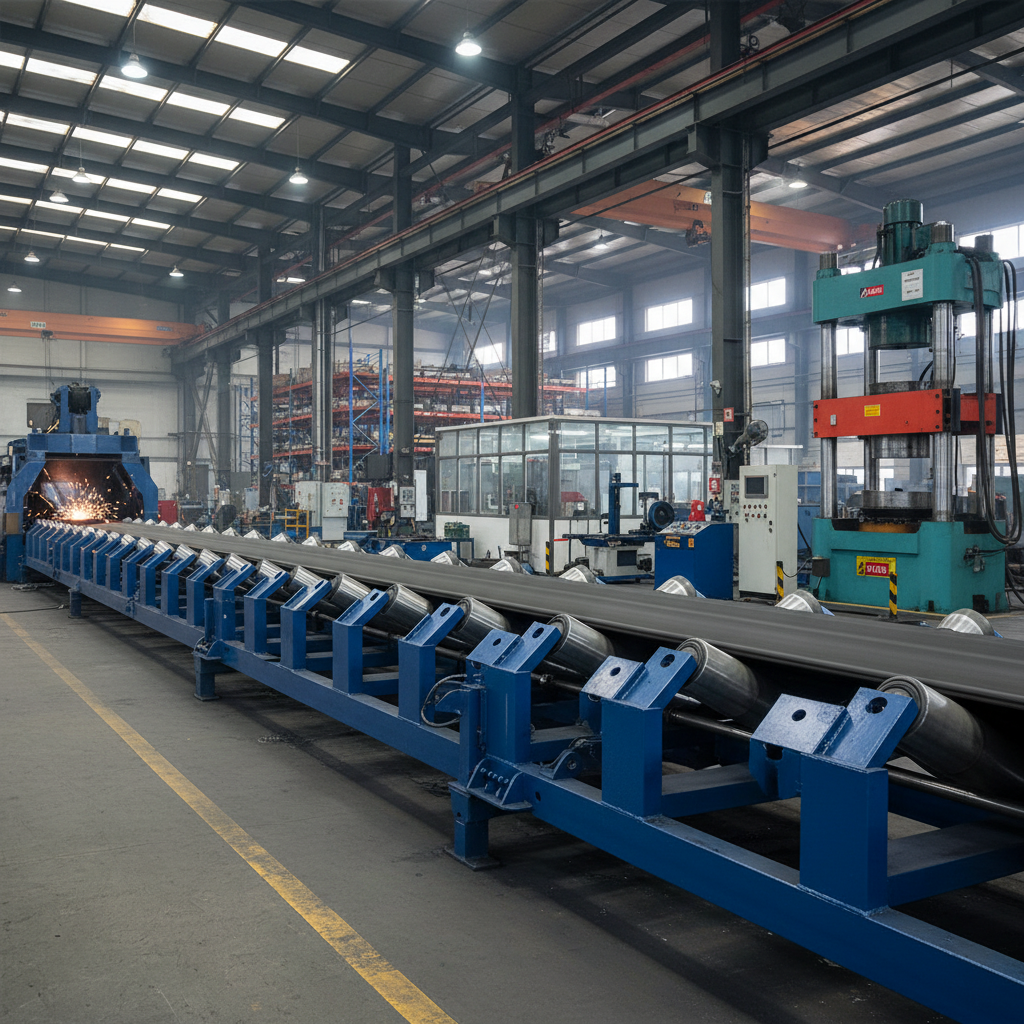


Reliable Return Idlers from Expert conveyor components manufacturers
Maintaining the stability of a belt's return path is critical for reducing unplanned downtime and preventing belt drift in heavy-duty material handling. Return idlers serve as the primary support for the empty belt, ensuring it remains centered and correctly aligned as it travels back toward the drive pulley. For operators in mining and cement plants, the choice of support rollers can directly impact the operational life of the belt and the frequency of manual adjustments. By utilizing high-precision components, plants can significantly mitigate the risks of belt misalignment and material buildup.
As specialized conveyor components manufacturers, we provide a diverse range of return idler configurations—including V-shaped, spiral, and flat designs—engineered to withstand abrasive environments. Whether dealing with the heavy dust of a coal mine or the corrosive nature of a chemical plant, selecting a return idler with the correct frame material and sealing technology is essential for achieving a long-term service life and reducing overall maintenance costs.

Technical Engineering of Return Idlers for High-Load Environments
The structural integrity of a return idler is determined by its frame material and the precision of its roller assembly. Most industrial applications utilize high-strength Q235B or Q235A steel for the frames, often shaped as angle steel, channel steel, or steel piping to provide maximum rigidity under load. The wall thickness, typically ranging from 6mm to 12mm, is tailored to the specific belt width (from 400mm up to 2400mm), ensuring that the frame does not deform under the tension of the returning belt.
A critical point of failure in traditional idlers is the bearing and seal assembly. To address this, advanced manufacturing processes now incorporate labyrinth seals and contact double seals. These mechanisms prevent the ingress of fine dust and moisture, which are prevalent in quarrying and metallurgy. When combined with high-quality bearings from brands like SKF or FAG, the result is a roller that maintains low friction and high rotational precision over thousands of operational hours.
Furthermore, the coating process plays a vital role in longevity. Electrostatic powder spraying and hot-dip galvanizing are employed to create a barrier against oxidation. In highly corrosive environments, such as those found in power plants or steel mills, these coatings prevent the frame from rusting, which would otherwise lead to structural failure and potential belt damage. The integration of robotic welding ensures that every joint is consistent, reducing the risk of stress fractures during continuous operation.

Matching Idler Configurations to Specific Operational Scenarios
Not all return paths are equal, and the choice of idler must match the material being transported and the environmental conditions. For instance, V-shaped idlers are the industry standard for providing a self-centering effect, helping the belt stay aligned without constant manual intervention. In contrast, flat return idlers are typically used in simpler setups where alignment is managed by separate tracking devices.
In environments where material "carry-back" is a significant issue, spiral idlers are highly effective. Their unique geometry allows accumulated debris to fall away from the belt rather than building up on the roller surface. This prevents the "flat spot" phenomenon and reduces the wear on the belt's bottom cover. For specialized cleaning requirements, comb idlers may be integrated to remove larger chunks of material that have adhered to the belt.
The application of these components spans multiple heavy industries. In coal mines and crushing plants, the focus is on impact resistance and dust exclusion. In recycling industries, versatility and ease of replacement are prioritized. By understanding the interaction between the belt and the support roller, engineers can design a system that minimizes energy loss and maximizes throughput, ensuring the conveyor operates at peak efficiency.
Procurement Considerations for Industrial Conveyor Supports
When evaluating suppliers, procurement managers should look beyond the initial price and focus on the Total Cost of Ownership (TCO). A cheap idler that fails every 5,000 hours is far more expensive than a premium component that lasts 30,000 hours due to the cost of labor and lost production time. Key specifications to verify include the material standard (e.g., Q235B), the wall thickness of the roller (typically 2.5mm to 6mm), and the bearing brand used.
Standardization is another critical factor. Ensuring that components meet CEMA, ISO, DIN, or JIS standards allows for easier integration and replacement across different equipment brands. Buyers should also inquire about the welding method; the use of welding robots generally indicates a higher level of consistency and quality control compared to manual arc welding.
Customization capabilities are equally important. Since every plant has unique belt widths and load requirements, the ability to provide tailored axle diameters (17-60mm) and roller diameters (48-219mm) ensures a perfect fit. Evaluating the manufacturer's quality management system, such as ISO9001 certification, provides an objective measure of their ability to deliver consistent products that meet rigorous safety and performance benchmarks.
Return Idler Technical Specification Matrix
| Feature Parameter | Standard Range / Material | Application Suitability | Expected Benefit |
|---|---|---|---|
| Frame Material | Angle/Channel Steel (Q235B) | Heavy-duty Mining/Steel Mills | High Structural Rigidity |
| Roller Diameter | 48mm - 219mm | Variable Belt Loads | Optimized Belt Support |
| Wall Thickness | 2.5mm - 6mm (Roller) | Abrasive Material Handling | Extended Wear Life |
| Coating Type | Hot-Dip Galvanized / Powder | Corrosive/Humid Environments | Rust and Corrosion Prevention |
| Service Life | Up to 30,000 Hours | Continuous 24/7 Operation | Reduced Maintenance Frequency |
Quality Assurance in Conveying Machinery Manufacturing
Quality in conveyor components is not just about the final product but the entire manufacturing process. A robust quality management system, such as ISO9001:2008, ensures that every stage—from raw material procurement to final inspection—is documented and controlled. For components used in hazardous areas, such as underground mines, obtaining safety marks from national mining product safety centers is a non-negotiable requirement for legal and operational safety.
The precision of the roller's rotation is a key indicator of quality. High-precision machining of the axle and the use of standardized bearing housings prevent vibration and noise. When rollers are not perfectly concentric, they create uneven pressure on the belt, which can lead to premature belt wear and misalignment. Rigorous testing of the seal's effectiveness against dust ingress is essential for components destined for cement plants or quarries.
Furthermore, the adoption of environmental and occupational health standards, such as ISO14001 and OHSAS 18001, reflects a manufacturer's commitment to sustainable production. This is increasingly important for global buyers who must adhere to strict ESG (Environmental, Social, and Governance) criteria. A manufacturer that invests in both technical precision and organizational standards is more likely to provide reliable, long-term partnership.
Future Trends in Material Handling Support Systems
The industry is moving toward "smart" conveying systems where the condition of components can be monitored in real-time. While return idlers are traditionally passive components, the integration of sensors to detect bearing temperature or vibration levels is becoming more common in critical sections of the conveyor. This shift toward predictive maintenance allows operators to replace a failing roller before it causes a belt tear or a system-wide shutdown.
Material science is also evolving, with a greater emphasis on composite materials and advanced polymers for rollers to reduce the overall weight of the system and lower rolling resistance. Reducing the friction coefficient not only extends the life of the component but also lowers the energy consumption of the entire conveyor system, contributing to the overall sustainability of the plant.
For those seeking reliable conveyor components manufacturers, the trend is toward integrated solutions. Instead of buying isolated parts, buyers are increasingly looking for partners who can provide the entire support system—including impact beds, self-aligning idlers, and belt cleaners—to ensure seamless compatibility and optimized performance across the entire conveyor line.
Frequently Asked Questions About Return Idlers
What is the primary difference between V-shaped and flat return idlers?
V-shaped return idlers are designed to create a trough shape for the returning belt, which naturally helps in centering the belt and preventing it from drifting. Flat return idlers provide a level support surface and are typically used in systems where the belt is narrow or where separate alignment devices are already installed.
How does the sealing mechanism affect the lifespan of the roller?
The sealing mechanism is the first line of defense against contaminants. Labyrinth seals and double contact seals prevent dust and water from entering the bearing housing. In dusty environments like mines, a high-quality seal can increase the service life from a few thousand hours to over 30,000 hours by preventing premature bearing failure.
Which frame material is best for highly corrosive environments?
For corrosive settings, frames made of Q235B steel that have undergone hot-dip galvanizing are highly recommended. This process creates a thick, durable zinc coating that protects the underlying steel from oxidation and chemical attack, far outperforming standard painting.
What are the typical maintenance signs for a return idler?
Common signs of failure include increased noise (squealing or grinding), visible rust on the roller surface, belt misalignment, or the presence of "flat spots" on the roller. If a roller stops rotating freely, it can act as an abrasive surface, quickly wearing through the bottom cover of the belt.
Can return idlers be customized for non-standard belt widths?
Yes, professional manufacturers can customize the frame length and roller diameter to accommodate belt widths from 400mm to 2400mm. Customizations also include specific axle diameters and specialized coatings to match the specific chemical or physical requirements of the application.
Why should I choose a manufacturer with ISO9001 certification?
ISO9001 certification ensures that the manufacturer follows a standardized quality management system. This means there is a consistent process for checking raw materials, monitoring welding quality, and testing the final product, which reduces the likelihood of receiving defective batches.
Technical References & Resources
- Overview of Conveyor System Engineering
- ISO Standards for Quality Management Systems
- Conveyor Equipment Manufacturers Association (CEMA) Guidelines
- DIN Technical Standards for Industrial Machinery
Selecting the right return idler is a balance between material specifications, environmental challenges, and long-term maintenance goals. By partnering with an experienced manufacturer, you can ensure your conveyor system operates with maximum uptime and minimal belt wear.
Related Articles